

For centuries residents of SE Asia have been enjoying the slightly bitter, alkaloid-laden teas formulated from the foliage of the Mitragynine speciosa. The tea is favored for its medicinal perks, as a way to relax after a long day, as a social beverage when company visits, and also as a festival beverage. Drinking Kratom tea is remarkably refreshing and fulfilling. If you would like to learn how to make kratom tea, please continue reading to learn more.
Table of Contents
What is Kratom Tea?
In a nutshell, kratom tea is no different than any other herbal tea. It is a beverage served either cold or hot that is created using kratom. Kratom is obtained from the foliage of the Mitragyna tree.
The Lush Tropical Mitgragyna Tree
The lovely, big-leafed Mitragyna speciosa tree is a showy specimen that flourishes in the hot tropics. It is a member of the coffee family. The tree’s aggressive growth nature has made it illegal to grow in the United States and other parts of the world. Once established, grows with extraordinarily little care. The tree can easily reach a height of 80 feet with a similar canopy width. It will overtake an area with its ample growth and push out other species.
You’ll find Mitragyna trees flourishing in exotic locations like Bali, Borneo, Vietnam, Indonesia, Malaysia, and Thailand. Historically, locals would grab the tree’s foliage to chew for an instant energy boost. The leaves are harvested, dried, cured, and pounded to create tea and powders.
Learning How to Make Kratom Tea
In the United States, people do not have access to the raw foliage of the tree so making tea the traditional way is rare. Kratom users typically ingest the alkaloids of kratom either via powder or capsule. Extracts have also increased in popularity. However, a true kratom lover always longs for tea. Luckily, we can show you how to make kratom tea with what you have available! There is no reason why you can’t enjoy the beverage just like generations have done in SE Asia. It just takes a little ingenuity and ‘MacGyver’s’ to conquer the problem.
The Effects of Kratom Tea and the Benefits

Making the Perfect Cup
Kratom is an herb so kratom tea is simply herbal tea. Although the Mitragynine tree is related to the coffee tree, it should be noted that the tea contains absolutely no caffeine. Yes, kratom boosts your energy substantially but one of the best things about the herb is that it does not cause a racing heart and shaking like caffeine. Instead, it’s like a slow burn.
You just feel improved energy without any of the nasty side effects caused by caffeine. Many users love using kratom tea in the morning in place of coffee. They instantly feel like they can conquer the world and don’t have a mid-day slump like they do with caffeine. Kratom tea is also a great replacement for harmful energy drinks. Workout enthusiasts will use energizing beverage before hitting the gym for the fast energy perk.
The Compound Composition of Kratom Leaves
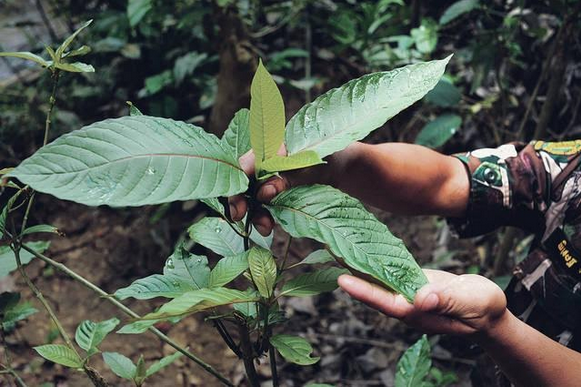
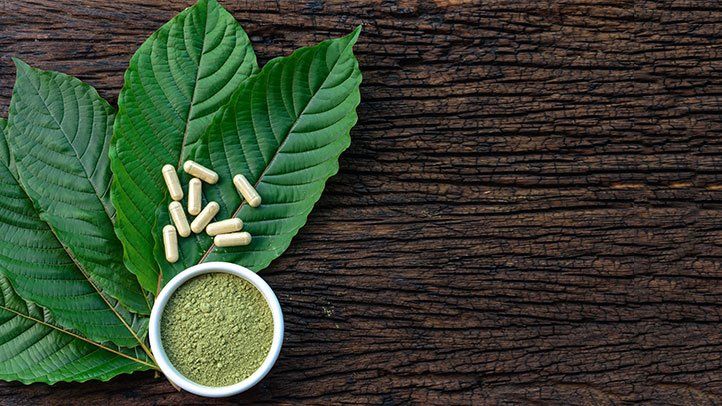
The foliage of the Mitragyna speciosa tree
The leaves of the Mitragyna speciosa tree are loaded with alkaloids. In fact, there are up to 40 different chemical alkaloids found in the tree’s foliage. However, the main compounds that you hear the most about are Mitragynine and 7-hydroxymitragynine which occur in the most abundant within the tree’s foliage. They act as the active components that bind with the body’s mu receptors to spur the release of dopamine and serotonin throughout your system.
Learning How to Make Kratom Tea
As mentioned, the majority of herb users choose kratom powder because it’s widely available and affordable. You can choose from a wide array of strains which is a huge perk because who doesn’t like diversity. However, ingesting the powder is a bit tricky. You can create a huge mess by filling capsules with a pre-measured amount or you can opt for the messy toss and wash method. With the toss and wash method, you place a spoonful of the bitter, chalky powder in your mouth and wash it down with water.
If you aren’t a pro at this method, then you are probably going to cough and sputter the first few times that you try it. Let me give you fair warning, the powder tastes nasty. It is bitter and dry. If you accidentally inhale when you are holding it in your mouth, then it’s like giving a dose of baby powder right in the face. The toss and wash method takes trial and error to master. Even the pros of this method do not favor the flavor, but they do like the effects of the herb.
An easier way to ingest kratom powder is as a tea! Kratom tea can easily be created using simple kratom powder. Basically, all you do is mix kratom powder in water and add a sweetener such as granulated sugar or honey.
Kratom Tea Options
When you think of tea, you probably envision tea bags filled with dried leaf pieces. In SE Asia this is the way kratom tea is sold (and as loose tea) but in the U.S. it’s hard to obtain pieces of kratom leaves so you have to improvise. You can purchase tea bags and fill them with kratom powder too steep in hot water to create tea. They are remarkably easy, and the tea bag helps filter out the grit of the kratom powder, so you enjoy a smoother beverage.
Using Kratom Powder
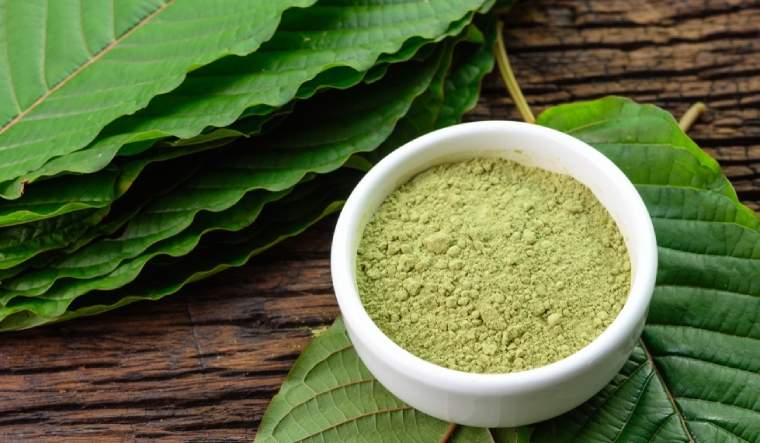
Powder for Tea
Honestly, the easiest way to enjoy the beverage is to simply mix the powder with water. Use hot water to dissolve the powder so it’s not chalky or sandy. Some people even brew the tea overnight. However, usually covering the kratom powder for five to 10 minutes will suffice to create the beverage. You can use a strainer to strain out any excess powder to create a wonderfully smooth beverage. A coffee filter or cheesecloth works well to strain the powder from the tea.
Flavoring Your Simple Kratom Tea
Add honey or pure cane sugar to sweeten the slightly bitter flavor of the kratom tea. You can even add a bit of lemon or combine the tea with one of your favorite tea bags to create a yummy beverage Use mint or chamomile tea to accentuate the flavor of the kratom tea.
Hot Tea vs. Iced Kratom Tea
Okay, in the south, people love their sweet cold tea. You don’t have to serve kratom tea hot. In fact, you can make the tea and then refrigerate the beverage to enjoy later once it has chilled. Add sugar and lemon to create a refreshing beverage that you can easily serve on the rocks.
Place a wedge of lemon or a sprig of mint in the drink to finish it off.
Boiling Tea and the Alkaloids
Many tea drinkers worry that boiling kratom powder might somehow alter or render the alkaloid found in the tree’s plant fiber ineffective. However, this is simply not the case. The alkaloids will remain every bit as effective whether served cold or boiled.
At My Kratom Club, we sell a wide array of kratom powders HERE that you can use to formulate a refreshing tea beverage.


Loved this post! I am a big herbal tea drinker and love educating myself on new herbal or natural health benefits and Kratom Tea is one I never had researched before. Even though I see it may be hard to do it the traditional way considering it’s not the easiest to get your hands on, now I have more information and benefits about Kratom so I can be on the lookout to find it to use in my day to day life. Thanks so much.
Thank you for going into detail about this. I am a big tea drinker but have never tried kratom before. I plan on looking into this now that I have learned about kratoms. I especially like that part where it can boost my energy but doesn’t give me a mid-day slump. Thank you!
Hi, hope you´re are doing well… I have a question about timing…
What are the most optimal times of day to consume Kratom Tea in order to maximize the potential benefits of the active alkaloids?
Algo, how does this vary with different methods of consumption such as drinking, eating, or inhaling and how does this compare to traditional methods of consuming kratom in Southeast Asia?
I know it´s a lot but I´m really want to start drinking it and any help would be appreciated.
Thanks for your feedback
Hey there,
Great article! I appreciate the thorough information provided on the benefits and potential effects of kratom. Keep up the good work!
Can you provide more information on the specific strain of kratom featured in this article and its potential effects? Are there any known interactions with other substances? Can you elaborate a bit more?
Regards,
Marios
Great piece of information on Kratom Tea. With all the benefits that come with this drink. You would think that investing in a Mitragyna tree indoor growing facility would be a nice move. I would be all in if this could take on the energy drink market. Nonetheless I will add Kratom tea to my new drink of choice.
Thank you for your informative post on how to make use of Kratom Tea.
This sounds like a great idea to use instead of caffeinated beverages and the health benefits sound like they would be better than other teas and coffees.
Are there any differences in the tree species across countries, or are these the same species? If different, which would make for the best tasting tea?
I enjoy tea and coffee, so I would be most interested in trying this product as a tea and also to see the energy and health benefits these may provide. thanks again for your post
Hey there Dale,
There are a few main strains of kratom and each has a different reason for using.
There is the red strain and that is best for relaxation and chronic pain relief.
There is then the white strain which is on the opposite side of the spectrum and provides energy, focus, and mild pain relief.
The green strain provides an in-between of the above two.
Maeng Da is the most popular strain and is one of the most potent and is used for a boost of energy, chronic pain relief, and mood elevation.
There are different parts of Southeast Asia where kratom is grown which can have a significant effect on the efficacy of the product.
Different brands and different strains can have varying factors depending on the area, specific far, farmers, weather conditions, and the process they use for their final kratom product among other factors.
Hello and thank you for your contribution. I am seeing more and more about this over the past few weeks.
If I am not mistaken it helps fight against Covid and other viruses. It makes sense as to why governments are banning it as it would of course tap into Big Pharma and its constituents.
Hi JR,
Kratom is a natural supplement not regulated by the FDA.
It does not prevent/cure any diseases/Viruses whatsoever which includes COVID.
Any representations of the effects of the products are based solely on customer feedback and not clinical tests for effectiveness.
Hello, my dear friend. I love kratom tea, but I rather making tea with kratom powder and water, I think it’s so much easier. No matter whether hot or cold, all types are delicious. Personally, I enjoy drinking cold kratom tea in the summer. The good news is, there are lots of choices. When the weather gets cold hot kratom tea is such a great choice. Thanks for sharing.
What a nice article! I, intolerant to caffeine, who am always looking for valid alternatives without side effects, did not know this tea. Now I can’t wait to try it!
I just have one question: do you know if it has any interaction with the functioning of the thyroid? It would be useful to know this before starting to use it.
However, knowing that it exists and gives a boost of energy to our body, without the side effects of caffeine, is very helpful.
I have been reading a lot about kratom after hearing about it from a colleague who is trying it out. She said there are actually several benefits of kratom that not many people are aware of. At first, I thought this might be similar to moringa or malunggay as we call it in the Philippines.
I really want to try but I am not sure if I will like the taste because you just confirmed what my friend told me; it tastes really nasty. Well, actually she used the word “awful.” ☺
But if I can put a little bit of honey (without altering its health benefits) then perhaps I would be able to swallow it, lol. I just have to condition my mind that it’s healthy and I should be fine.
Awesome post on how to make kratom tea! After reading your article, it definitely sounds like I should give kratom tea a try for its energy benefits. I’m wondering what kratom tea tastes like, though? Are there any recipes where I can add other ingredients like fruit and make custom drinks?
Kratom tea seems to be just what I need! I need to cut caffeine from my diet (I am a Diet Coke lover), and kratom tea can boost my energy while having absolutely no caffeine. This is something that I like! Also, it’s funny that people from SE Asia drink this tea cold. For me, tea must always be hot…or nothing! This is something I must absolutely try at least once.
Thank you for creating this article. Tea is so much more than just a beverage, but also a big part of tradition and culture.
I have already tried Kratom Tea and think that it’s pretty good no matter if you enjoy it hot or cold.
But a really good question is whether you think it is best served in powder form or in leaves?
As a tea drinker, and one that loves herbal teas and chai, this is great to find another tea to add to my collection, namely kratom tea. I prefer brewing tea from leaves, rather than powder, as leaves seem to give a far better taste and aroma.
I live in Australia, so is kratom tea available in Australia? I have heard that using kratom can have side effects, so does using kratom tea have side effects? Thank you.
Hi Line,
Great question!
Currently, Kratom is banned in Australia but we are hoping that this ban changes soon as it is clear from our customer’s feedback kratom can prove to be very helpful with many ailments.
Kratom Legality is a bit of a complicated subject and we discuss more HERE.
It is important to note that the potential side effects of kratom tea can vary depending on the person and the dosage. Some people may experience few or no side effects, while others may experience nausea, dry mouth, and drowsiness. Additional symptoms are not common with responsible use of kratom and consulting your physician prior to use.
The benefits of kratom cannot be overemphasized. Especially in terms of energy and the general well being of the body. So being able to consume it as herbal tea makes it easy and fun. For folks who do not like the taste and side effects of caffeine in coffee, I think kratom tea will be a great alternative
I’ve been a tea drinker for many years. I recently made a complete switch from coffee to tea because I can’t stand feeling jittery after drinking too much coffee.
I find that tea is a lot better and healthier for me. Although I’ve never tried Kratom tea before, it’s something I’m willing to try.
I’ve been a fan of Tazo Chai, but Kratom looks like another option. I didn’t know it’s rare to have access to the foliage of the tree in the U.S.
Do you know why there’s rare access to it? Also, do you recommend brewing the tea overnight? Would it make a difference in that case?
Other than that, I’ll have to try out Kratom. I think I’ll enjoy it.
Thank you for sharing.
Kratom tea found your guide after researching for herbal tea that does not make my heart race, as I have to be careful with my underlying condition such as anxiety, high blood pressure, and diabetes that is just to name a few underlying conditions. After reading your helpful instructions, I am going to make my Kratom tea to have during lunch.
Before reading this essay, I was completely unfamiliar with kratom tea. We recently made the change from coffee (caffeine) to herbal tea, namely a regionally produced blend of dandelion root and nettle. With a bit of honey added after steeping, this is heavenly. I appreciate your excellent essay very much. Definitely going to pass this along!
Hi there! Thank you for writing about how to make kratom tea. As someone who is interested in alternative forms of natural healing, I find kratom to be an interesting and potentially beneficial substance.
Making kratom tea is a simple process, but it’s important to be aware of the potential effects and choices that come with it. It’s always a good idea to do your research and fully understand the risks and benefits before trying any new substance.
One of the main benefits of kratom tea is its ability to provide pain relief and improve mood. Some people also claim that it can help with anxiety and addiction. However, it’s important to note that the effects of kratom can vary greatly depending on the strain and dosage. It’s always best to start with a low dose and gradually increase as needed.
I have never heard of kratom tea before this article.
Our most recent switch personally has been from coffee (caffeine) to herbal tea, but we have chosen a local product of dandelion root and nettle. Steeped, this tastes delicious with a spoonful of honey.
In comparison, what would you describe the flavor of the boiled water/kratom powder mix to be? I could only assume from the two that we drink, it would be the same?
Hey Jeremy,
That is an excellent question.
The taste is very bitter and not for the faint at heart.
Many people that are used to kratom powder make the tea by itself.
However, we strongly recommend that you take the tea first with a smoothie and/or other mixed drinks.
Please take a look at another guide that discusses kratom tea along with different ways that our customers take kratom.
https://mykratomclub.com/kratom-tea-the-complete-guide/
A guide discussing the benefits customers have had from kratom tea:
https://mykratomclub.com/kratom-tea-benefits/
Here is an article that goes over some of the most popular ways of taking kratom:
https://mykratomclub.com/best-ways-to-take-kratom/
Hope this information provides a better idea of what kratom tea is, it’s uses, reported benefits, and a different tips of how to consume it.
I use Keaton red vein to sleep. I bought the powder because swallowing 4-6 capsules just before bed feels like a lump in my chest until capsules dissolve. Please suggest amount of powder to water for tea to sleep and how to make it taste good. Thanks
Hi Alvarado,
Happy to read that the red vein kratom is helping you sleep.
It is best to start with a smaller dose and ease your way into getting the desired effect according to our customer feedback.
Our customers do mix the kratom powder with fruit drinks and other flavorful beverages to mask the bitter taste of kratom.
If interested in a powder that is less bitter we recommend trying the Yellow Vietnam kratom strains.
Hope this information helps.